The Tico Face
I met my husband for the first time among the noise and bustle of Waterloo train station in London. English is his native language, Spanish is mine.
I was waiting for him on the second floor of a coffee shop. When he arrived, he asked if I was Katherine. I blushed and awkwardly smiled. As I nodded, he said something I couldn’t understand and walked away. I thought: “Is the date over already?” As I tried to make sense of what he said, the word ‘coffee’ came to mind. I walked down the stairs and there he was, buying a cup of coffee. I could breathe again.
The expression on my face would become a common occurrence of our early relationship. We called it “The Tico Face”. Tico is the word that we, Costa Ricans, use to refer to ourselves.
When I was learning English I experienced frustrating and amusing moments. Here are a few:
The "foggy days", when even the simplest words in my repertoire don’t come to mind easily.
The “let’s get the main idea from the context” day, when I only understand a couple of keywords.
The “wait until I translate everything in my mind” days, where I translate from their language to mine. Pause, think what to answer. Translate from my language to theirs. Repeat.
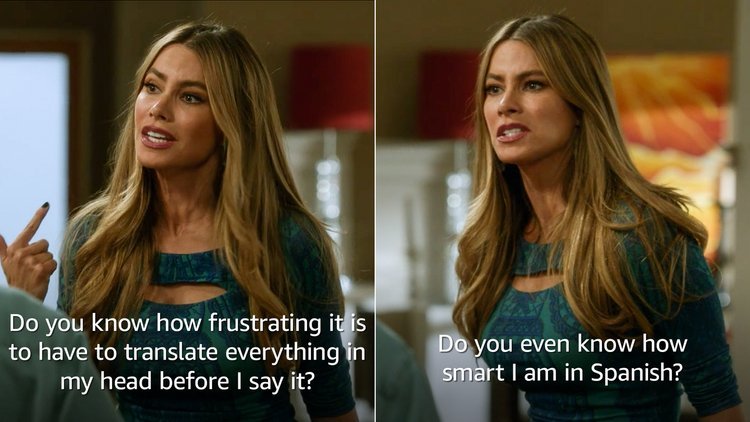
Modern Family
The “charade game” days are hilarious, those where I don’t know a word or can’t remember it so I start making noises: “the puff!”, “the vroom” or start calling it the “thingy”, hoping my brain will remember or until the other person gets a lucky guess.
And my favorite: the “mix and match” days, when I randomly start speaking in my native language and I see a reflection of my tico face in the other person. I can’t help but chuckle and think: “so this is how I look when I don’t understand”.
After holding on and embracing the struggle for what felt like an eternity, the magic started to happen. I stopped worrying about perfection and realized most of the pressure was self-imposed. I started noticing people genuinely wanted to talk with me and me not speaking their language perfectly has never been a problem: I can connect, communicate and be understood.
If you are talking to a person doing the tico face, speak slower, be patient if they keep asking you to repeat words and give them time to process what was said. If they make sounds or signs, play along and help them find the word that they are missing. They are trying hard. And, if you are feeling adventurous, ask how you say certain words in their language.
If you, like me, are the one with the tico face, congratulations! You are challenging yourself by pursuing something new and putting yourself in uncomfortable situations. Don’t take yourself too seriously and know that you are creating a safe environment for others to laugh at themselves and be vulnerable.
I am learning Italian now. I am excited about how my tico face will evolve to include more hand gestures.
Chao, Bye, Ciao.